Author: Vikas Chawla

  • Beat the Odds Podcast Launched

    In Mar 2026, we launched Beat the Odds, a podcast where we bypass polished press releases to dive into the raw, unfiltered, and unvarnished journey of building iconic brands and organisations. Moving beyond the typical boardroom discussion, we host candid conversations with Founders and C-Suite leaders designed to be as insightful and deep as possible. We expose the truth behind how leaders overcame significant challenges to achieve success, from the “early grind” and strategic pivot points to future-proofing strategies. Produced by Social Beat and hosted by me.

    Our first guest was Sudhir Rao, India Managing Partner for Celesta Capital. Sudhir comes with 40+ years of experience as an industry pioneer in Indian capital markets and enterprise-building, As Founding Director of Karvy Investor Services he scaled it to serve ~20 million investor accounts. He then went on to become an angel investor and was founding Managing Partner of IndusAge Partners, which merged with Walden/WRV and then turned into Celesta Capital in 2021, a $1.1 B deep-tech focused VC platform. He is an Independent Director on multiple boards (listed & private), including Aditya Birla Money, RBL FinServ, and Radhakrishna Foodland apart from a Board Observer in many of his portfolio companies. He Explains The 7-Year Rule: Why 4 years are “odds” and 3 years are “evens” in every sector. The Black Swan of 9/11: How an unanticipated global event exposed a leadership failure. The Zero Trust Era: Why “trust is a poor adhesive” and how to build transaction-based reliability. The Food Business Framework: Understanding Taste, Aftertaste, and Afterwaste. Scaling the “Impossible”: Why you should only climb cliffs that are unlikely to be achieved.
  • British Library in Chennai closes down

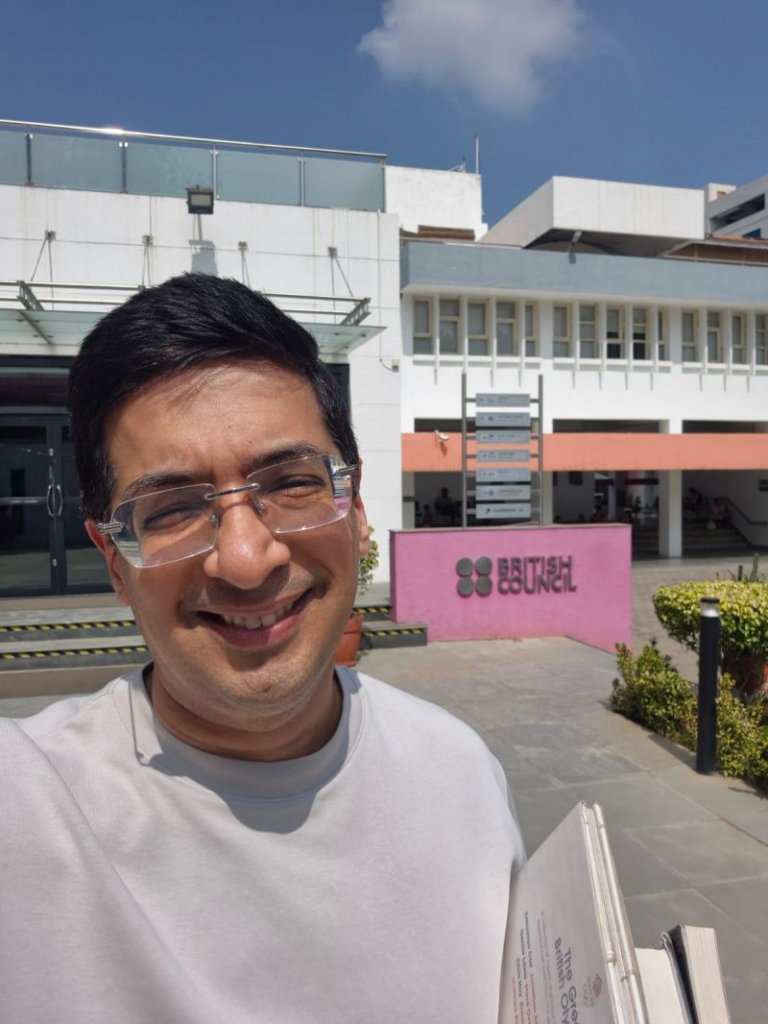
    I took my son to a library last month knowing it was our last visit. That library is as old as independent India.

    The British Council Library has been in Chennai since 1948. That is before India even celebrated its second Independence Day.

    My son and I used to visit regularly. Last month, I went there one final time to buy whatever books I could. For him and for me.

    But this is not just about Chennai.


    India once had 7 British Council Libraries. Here is how we lost them:
    → Lucknow and Patna shut down in the mid-1990s
    → Bangalore, Hyderabad, Pune, Ahmedabad, Chandigarh went fully digital in 2020
    → Chennai closed on Feb 15, 2026

    Only Delhi and Kolkata are left now.

    It did not happen suddenly. It happened city by city, quietly. Budget cuts from the British Council side. Logistics of running physical spaces in multiple cities.
    The digital shift made it harder to justify keeping them open.

    But here is what concerns me more.

    An average Indian now spends 7+ hours on screens daily. Time spent reading books? Under 30 minutes and we are okay with that.

    We are not just losing libraries. We are losing the habit of sitting with a book long enough to actually think. I am not anti-technology. I run a business that runs on tech every single day.

    But screens give you information and books give you the patience to process it. That difference matters.

    If you have a library near you, take your kid there this weekend.
    While it is still open.

    Did you ever visit a British Council Library growing up?

  • My volunteering experience with AIESEC opened more doors than I could have imagined

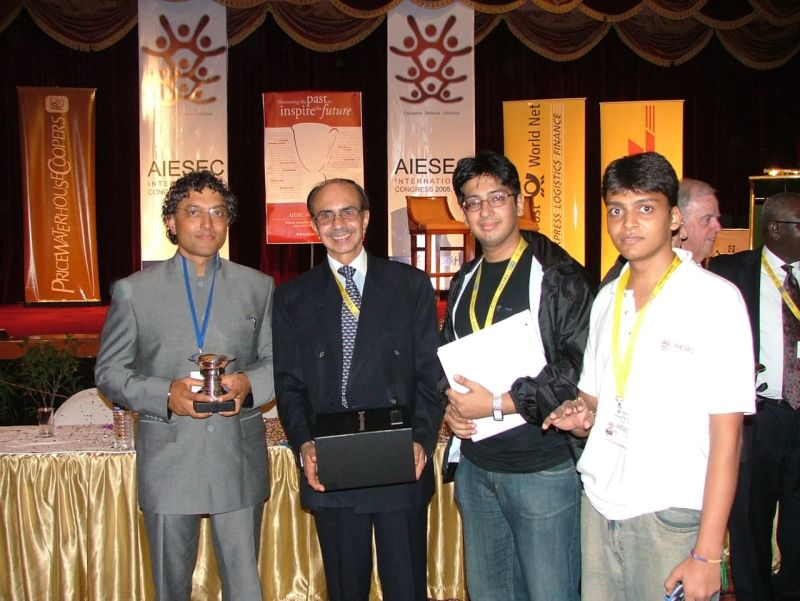
    I volunteered at AIESEC in India without knowing it would land me my first job. That one decision taught me something I still believe 20 years later.

    Back in college, I had no grand career plan. I just wanted to do something beyond textbooks. AIESEC seemed interesting, so I raised my hand.

    I didn’t know anyone. I wasn’t sure what I’d get out of it. But I showed up, did the work, and somewhere along the way, that volunteer experience turned into my first real job at Taj Hotels.

    A few years later, I attended a National HRD Network event. I could have skipped it. Instead, I walked up to a senior HR professional and started a conversation. That one conversation opened doors to my next role at Murugappa Group.

    Then came Social Beat which Suneil Chawla and I had just started. No clients, no reputation. Someone invited me to speak at a small event – maybe 25 people in the room. I almost said ‘No’. What’s the point of speaking to just 25 people?


    One of those 25 became our first client.

    Today, Social Beat is a 250+ team member company and a growth partner of top consumer brands in India.

    Looking back, every major turn in my career came from putting myself in rooms before I had a reason to be there. A volunteer form I filled. A networking event I attended. A speaking gig I almost skipped.

    You never know which room holds your next chapter. But you have to walk in first.

    What’s one room you walked into that changed everything?

  • Companies going global don’t fail because of cost or capability, but lack of ambition.

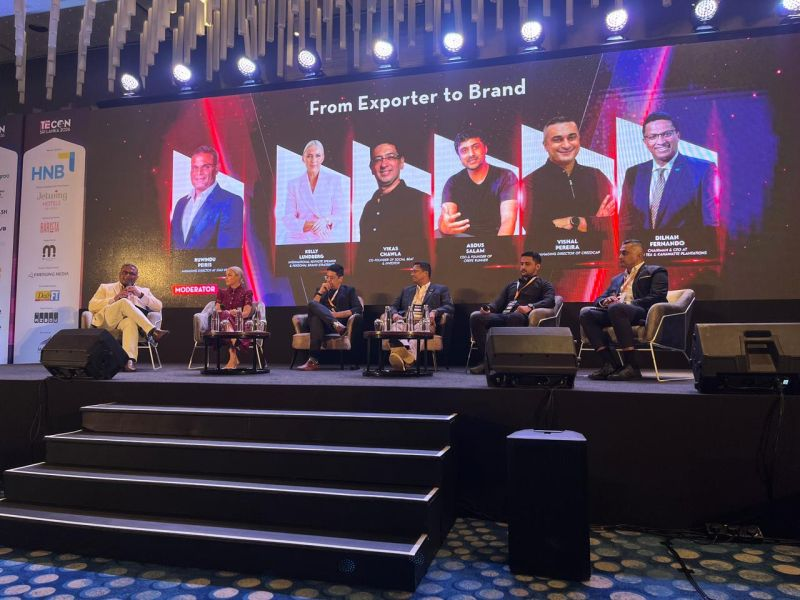
    I flew to Colombo to tell founders one uncomfortable truth about why Indian brands fail abroad.

    TiECon Colombo was my first international speaking opportunity. The topic – how can brands go global (while focus was for Sri Lankan brands – learnings apply to Indian founders too)

    A room full of founders, and the one thing that got everyone nodding wasn’t a strategy or framework.

    It was this – Companies don’t fail abroad because of cost or capability. They fail when belief lags behind ambition.


    Ambition decides whether you run a small pilot or bet big on a new market. Everything starts there.

    Here’s what I shared with the room:

    → Stop selling your heritage. Sell the outcome. Kapiva cracked the US market by never using the word “Ayurveda.” They sold performance rituals for modern men. That one positioning shift changed everything.

    → Talk to your customers before building anything. Not surveys, but real conversations. Understand their pain points, not your assumptions.

    → Test with digital first. Run a pilot – lead gen for services, a D2C site for products. You don’t need an office abroad to start selling abroad.

    → Premium is never about price. It’s about perceived value. And perceived value comes from storytelling – on your products, your experiences, your brand.

    Also met Vijay Amritraj backstage – fellow Don Bosco alumni. He was just awarded the Padma Bhushan. He took Indian tennis global 45 years ago, reaching world no. 16 in 1980 – still one of the highest rankings by an Indian singles player.

    Different fields, but same lesson. Excellence combined with ambition can take you anywhere.

    If you’re an Indian founder thinking about going global – start with one question. Do you truly believe your brand belongs on a world stage?

  • Fortune Foods turned 50,000 home cooks into influencers without paying a rupee

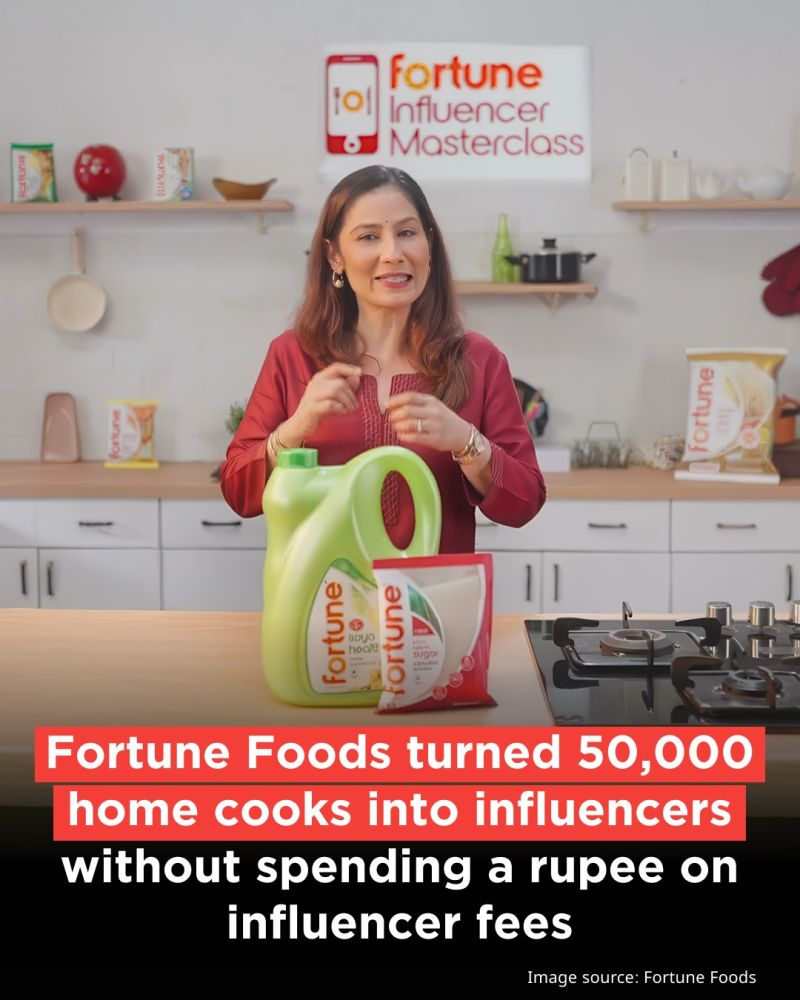
    Most FMCG brands pay influencers to promote food. Fortune Foods attracted 50,000 home cooks to become influencers instead.

    India’s influencer marketing industry is worth over ₹10,000 crore. Almost every FMCG brand is spending lakhs fighting over the same 100-200 food creators.

    Same faces, same recipes, same branded posts.

    At Influencer.in, we went to Fortune Foods with a different pitch this year – instead of hiring creators, let’s build new ones from scratch.

    That’s how the Fortune Influencer Masterclass was born. The concept was simple – give regular home cooks real training, actual tools, and a platform to showcase their talent.

    Not celebrities or established creators. Just regular Indians who love cooking and never had a shot at turning it into something bigger.


    Over 4 months, we ran a multi-stage evaluation:

    → Integrated Partnership with MasterChef on TV & Digital across media & in-show placement

    → MasterChef winners and contestants judged top entries

    → Criteria went beyond cooking – video editing, plating, storytelling, and even animation

    → 250 shortlisted creators got expert-led training, essential creator tools, and direct mentorship via a portal we built

    → Winners got trained by Meghna Kamdar, a Forbes Top 100 Digital Star with 5M+ followers

    The results:
    → 50,000 registrations with zero paid promotion
    → 25 winners actually got annual content deals worth up to ₹2 lakhs each, with Fortune Foods

    At the felicitation event in Ahmedabad, we watched some of these winners tear up on stage and share how they’d been posting recipes for years with barely any views just 4 months ago, and now creating content for such a renowned FMCG brand.

    That moment reminded me why we started Influencer.in in the first place.

    Proud to have built this with Fortune Foods as part of their 25-year celebration.

    What’s the smartest influencer campaign you’ve seen recently?

  • My take on Rayban Meta Smart Glasses

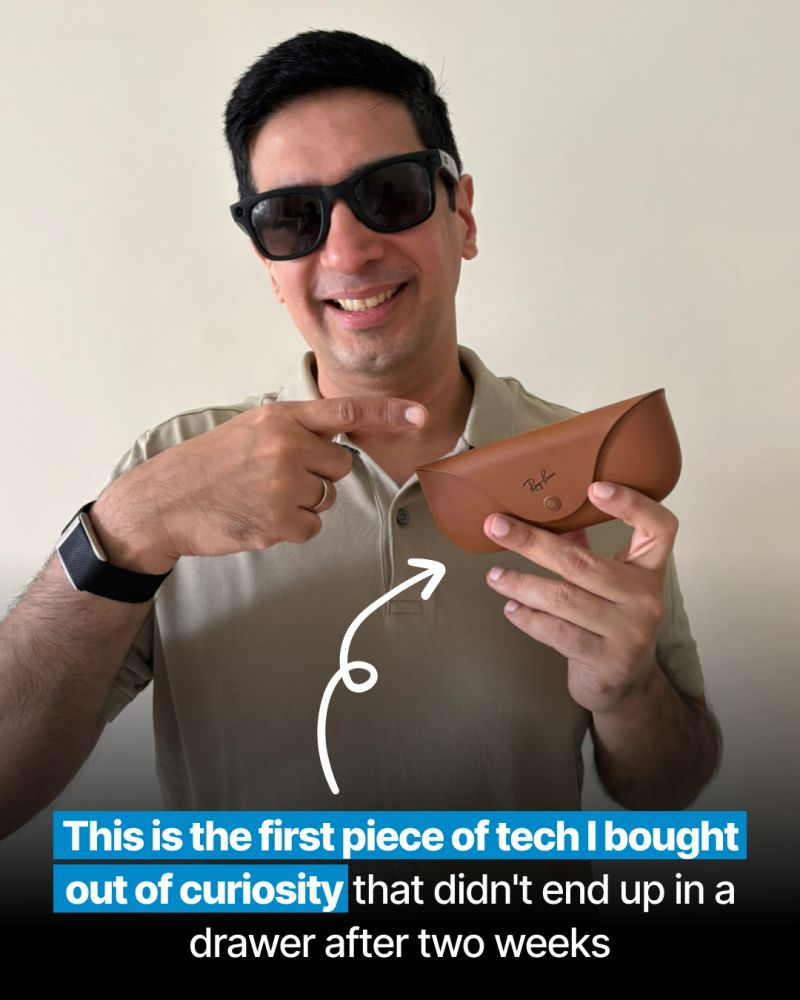
    I finally found a gadget that made me more present with my family, and it sits on my face.

    The Meta team was kind enough to gift me Meta Ray-Ban smart glasses. I tried it mostly out of curiosity, but didn’t expect them to actually be so amazing.


    3 weeks in, and I can see the pivotal moment of wearables is here.

    Here’s what actually happened:

    → Work calls became hands-free. I pace around the office during back-to-back calls. With these, I just say “Hey Meta, call…” and keep moving. No phone in hand, and no headphones clamped on for hours.

    → Music without shutting the world out. Open-ear speakers built into the frame. Good enough for Apple Music while working, but I can still hear everything around me. It feels like invisible room speakers, and not a device on my head.

    → Family moments without a phone between us. This one got me. During our Christmas lunch, I tapped the frame and recorded POV clips of Ahaan opening gifts, everyone laughing, the chaos, just living the moment and capturing it at the same time.

    Watching those clips later, regular phone videos feel flat in comparison.

    And they look like normal Ray-Bans. Nobody knows there’s a 12MP camera, 5 mics, and a built-in AI assistant sitting on your nose.

    Everyone keeps waiting for some big AR headset moment. But the real AI hardware future might just be a slightly smarter pair of sunglasses that makes your daily life a little lighter.

  • Why do I run busineeses together

    A lot of people ask me why I run 2 businesses. The answer is simple – one can’t survive without the other.

    12 years ago, my brother Suneil Chawla and I started Social Beat – a digital marketing agency.

    We ran influencer campaigns for brands. But we kept hitting the same wall.

    Brands didn’t know which creators were actually good. Creators didn’t know what brands really wanted. Everyone was guessing.

    We couldnt track ROI. Campaigns worked sometimes & other times it dint. And clients got frustrated.


    So we built Influencer.in – a platform, which now has 1+ million creators.

    Now here’s what changed:
    → Social Beat understands what brands need
    Influencer.in understands which creators deliver
    → One feeds the other. No more guessing.

    When Social Beat briefs a campaign, we already know which creators will work. When creators join Influencer.in, they get clear briefs – not vague requests.

    The gap that was killing us became our biggest advantage.

    Everyone told us to pick one. Agency or platform. Focus.

    But the problem was never focus. The problem was that agencies and platforms don’t talk to each other. We fixed that by owning both.

    Today, together we have a 250+ member team delivering business outcomes to some of India’s largest consumer brands – and been recognized as an Indicorn.

    The lesson? Sometimes “focus on one thing” is wrong. Especially when your one thing has a missing piece.

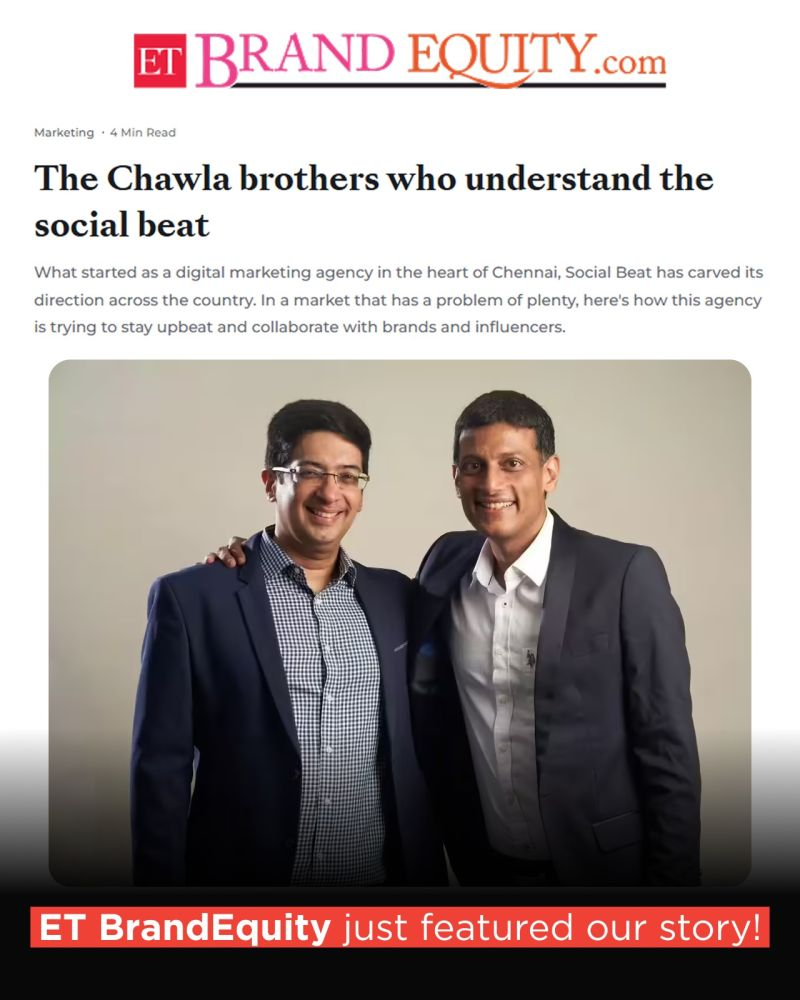
  • ET Brand Equity showcases the journey of Social Beat

    We decided not to get out of our comfort zone and built our agency from our hometown. Thanks to ET BrandEquity for featuring this story in their recent article!

    In 2012, Suneil & I set up Social Beat in Chennai. At the time, most digital agencies were starting in Mumbai or Delhi.

    Our approach was simple: start where you understand the ecosystem best, then expand strategically.

    Early on, we learned that brands wanted partners who could execute effectively and drive measurable results.

    That’s why:

    📍We invested in senior talent.
    We have 15 senior leaders for a 300-member team, which sounds crazy expensive. But our client retention rates are higher than most agencies of our size.

    📍We embraced technology and AI early.
    Our internal AI tool, called Creative Catalyst, increased productivity by 15%, helping us deliver campaigns faster and reduce costs for clients.

    Now we’re working on:

    → Evolving our influencer vertical – a platform for brands to discover creators and track analytics. We are already up to 500k curated creators on the platform

    → Building Prism – our programmatic platform that helps businesses bring in media efficiency, measurement, tracking business outcomes & creative analysis all in one place

    What I appreciate most is how ET understood our philosophy. We don’t just want to be a tactical execution partner. We want bottom-line impact for our clients.

    Eleven years of proving that location doesn’t define capability.
    That senior talent investment pays off.
    That technology should reduce costs, not increase them.

    Thanks to our team, clients & partners who made this happen. Thanks to Priyanka Nair and the ET BrandEquity team for taking the time to write about our story.

    P.S. Which business philosophy have you stuck with despite people saying it’s wrong?

    You can read the full feature here: https://brandequity.economictimes.indiatimes.com/news/marketing/the-chawla-brothers-who-understand-the-social-beat/124069321

  • Our Lacto Calamine Influencer campaign crossed 10+ million organic views

    10 million organic views in 5 days – only possible with an influencer campaign!

    I am talking about Lacto Calamine and how they reimagined creator collaborations, one micro series at a time.

    Partnering with Social Beat and Influencer.in, the brand moved from one-off collabs to micro web series. It was short, snackable, creator-led storylines that blur the lines between entertainment and brand storytelling.

    Each series was scripted, emotional, and refreshingly real. They explored insecurities, relationships, self-confidence, and identity, all while the sunscreen sat naturally at the heart of it.

    The result?
    → Over 10 million organic views in just 5 days
    → 60,000+ shares, 50,000 saves, and an engagement rate of 57%

    And this is just the beginning. More creators are joining the journey soon.

    This wasn’t plug-and-play influencer content. It was co-created storytelling with creators handpicked for their authentic voices and given the freedom to speak the language of Gen Z.

    We didn’t want to talk to Gen Z. We wanted to speak their language and that made all the difference.

    A big shoutout to the Social Beat team and the incredible folks at Piramal Consumer HealthcareAashna Bhatia, Sawan Acharya, Aditya Sharma and Shruti Punn for making this possible.

    And to our brilliant creators for proving that authentic, creator-first storytelling can be both impactful and organic.

    Check this link to watch one of the episodes. Fair warning though, it doesn’t look like an ad at all: https://www.instagram.com/reel/DPOcTKOjMIz/

  • YouTube Brandcast 2025 showcased our creator work with Sebamed India

    2 weeks ago, our work with sebamed was showcased at YouTube Brandcast, and we couldn’t be prouder to partner with them!

    Sebamed is a personal care brand. They recently launched a Gentle Facial Cleanser and needed to build awareness among premium consumers who care about skin health.

    The campaign delivered exactly what we promised:

    → 20x increase in brand searches
    → 50M premium consumers reached with precision
    → Creators as authentic commerce drivers
    → 2X Growth in Sales

    What I love about this recognition is that it validates something we’ve believed for years –

    📌when you give creators the right brief and the right support, they become powerful brand advocates.

    📌choosing the right platform is crucial. We focused entirely on YouTube.

    For Sebamed, this wasn’t just about awareness. It was about building genuine connections with audiences who care about skin health.

    The Brandcast feature is a great validation, but the real win is seeing how creator-led strategies are becoming mainstream for premium brands.

    Thanks to YouTube and the Sebamed team, who trusted our approach.

    Sometimes the best campaigns happen when clients are willing to think differently.

    What’s your take on creator-led commerce?

    P.S. Read this post for more details about the strategies we use-
    https://lnkd.in/eVMaTczHActivate to view larger image,

    No alternative text description for this image